


The Ten
Sefirot
- The ten Sefirot refer to the underlying structure of the spiritual vessel through which we perceive the spiritual reality.
- The ten Sefirot are the structure of the soul, or of our spiritual senses. They are immaterial and have no connection with any physical object or being.
- The ten Sefirot are not only the structure of the vessel through which we perceive reality; they are also the structure of reality itself.


Introduction to the Ten Sefirot
The ten Sefirot refer to the underlying structure of the spiritual vessel through which we perceive the spiritual reality. In our corporeal world, we have a body with five senses that lets us perceive our material experience. Likewise, we can develop non-material senses to perceive non-material existence. The structure of such a vessel in Kabbalah is made up of ten Sefirot. They can be considered the structure of the soul or the structure of our spiritual senses. They are immaterial and have no connection with any physical object or being.
Understanding the Structure of Reality
In the spiritual perception of reality, there is no separation between us and what we perceive. Instead, there is a certain clarity that reality is but a single force. The structure of the spiritual vessel as ten Sefirot or the structure of spiritual reality itself is one and the same. It is different from our corporeal experience where we perceive a separation between ourselves and the external world.
In the spiritual reality, we perceive existence as a part of ourselves. The still, vegetative, animate, and human levels of nature, along with other spiritual qualities, are our different layers. The ten Sefirot are thus not just the structure of the vessel through which we perceive reality; they are also the structure of reality itself. Kabbalists use the ten Sefirot to describe both perspectives: the perceiver and what is perceived.
The Origin of the Ten Sefirot
Creation is made of a single substance: desire. The desire to receive delight and pleasure is the matter of creation, from beginning to end. Everything in existence, from still objects through to plant and animal life, and up to the highest spiritual states, is but different measures and values of the desire to receive.
Kabbalists explain that the desire to receive was created through five stages. These five stages form the basis of the ten Sefirot.
The first stage, called the Root Phase (Behina Shoresh in Hebrew), is the desire to bestow that initially emerges to create the desire to receive and fill it with delight in Phase 1 (Behina Aleph). Then, Phase 1 undergoes a certain kind of development, where despite it being immersed in the reception of immense pleasure and abundance, it eventually feels ashamed of its reception from a much greater giving force. It then discerns that it wishes to stop receiving in order to give back everything it would otherwise receive, which characterizes the next stage, Phase 2 (Behina Bet),
Afterward, the desire further develops in Phase 2 to eventually acknowledge that even though giving is a much greater force in reality, its very own nature is one of reception and that it was made to receive pleasure, and so then it undergoes various scrutinies of letting itself receive small portions of delight and pleasure while continuing to give back most of what it receives. The scrutinies at this stage are described as Phase Three (Behina Gimel).
In the end, the desire to receive reaches the decision that it needs to receive all the possible delight and pleasure that extends from the giving force with the full awareness that it is what the initial giving force intended and wants of the desire to receive that it created. Therefore, with the intention to give the giving force, the Creator, the pleasure of bestowing to it the fullest possible extent of pleasure, the desire to receive decides to become a full receiver of the delight and pleasure. The latter development of the desire to receive characterizes Phase Four (Behina Dalet) of its development, where it adds the mind of the giver, or the intention to bestow contentment to the giver, upon the full extent of reception of pleasure and abundance that extends from the giver, the Creator.
These phases, also known as the “Four Phases of Direct Light” correspond to the ten Sefirot as follows:
- Root Phase (Behina Shoresh): Keter
- Phase 1 (Behina Aleph): Hochma
- Phase 2 (Behina Bet): Bina
- Phase 3 (Behina Gimel): Hesed, Gevura, Tifferet, Netzah, Hod, Yesod (Phase 3 is also called Zeir Anpin, which subdivides into six Sefirot, creating the full structure of ten Sefirot.)
- Phase 4 (Behina Dalet): Malchut

The Ten Sefirot in Different Worlds
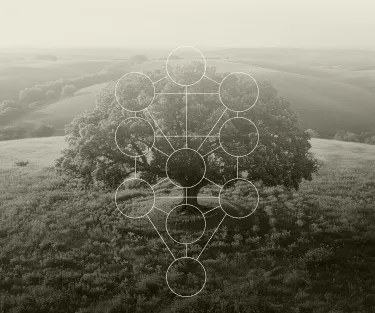
The ten Sefirot exist at every level of reality. The spiritual worlds are structured according to the ten Sefirot, divided into the following:
- Adam Kadmon
- Atzilut
- Beria
- Yetzira
- Assiya
Each world contains ten Sefirot, and within each Sefira, there are further divisions, forming a fractal pattern that extends infinitely.

The Five Senses and the Ten Sefirot
According to the law of root and branch, which dictates that everything that eventuates and takes place in the highest spiritual world is found unchanged in its successive world, a process that continues down all successive worlds down to our lowest corporeal world, so even in this world, our perception is structured by five senses: sight, sound, smell, taste, and touch.
These five senses correspond to the ten Sefirot.
In other words, even our corporeal perception is shaped by the same fundamental spiritual structure of the ten Sefirot. Our five corporeal senses are merely an expression of the ten Sefirot in their lowest form.
Developing Our Ten Sefirot
In the wisdom of Kabbalah, although it might be interesting to learn about how our reality is formed and structured, its purpose is not to solely intellectually study such structures for the sake of understanding some general placements of spiritual entities and processes. Its purpose is rather to provide us with a method for how we can develop ourselves spiritually and reach a clear perception and sensation of the spiritual structures and processes through developing a new spiritual sense that is equal in form to spiritual qualities, or in other words, by developing our own ten Sefirot.
This process of spiritual development begins from the existence of a special spiritual desire that Kabbalists call the “point in the heart.” The heart represents our corporeal desires, while the point in the heart is the desire to attain life’s meaning and purpose.
Many people suppress this desire due to various distractions in our material reality. However, for those who feel a deep longing to attain spiritual truth, this point in the heart becomes the seed for developing the new spiritual sense. Then, with this new spiritual sense, we develop our perception and sensation of the ten Sefirot. By applying ourselves to the method of Kabbalah, we learn how to cultivate, nurture, and grow this initial seed—the desire for spirituality, the point in the heart—into a full spiritual structure.
Similar to how plants grow from seeds by being placed in suitable environmental conditions for their growth, likewise cultivating, nurturing, and growing the point in the heart into a full spiritual structure requires placing it in a spiritually-conducive environment, which consists of three key means:

- Kabbalistic books – texts that describe the spiritual reality, through which we can attract spiritual forces that help our spiritual desire develop.
- A Kabbalistic group – others who share a common desire, the point in the heart, with a common goal to spiritually develop, and who support and encourage each other in such development.
- A Kabbalist teacher – one who has developed their point in the heart into a full spiritual structure and can provide guidance to the student on how they can relate to the books, group, teacher, and themselves at every given moment in order to optimally develop their spiritual desire into a full spiritual structure.
Ultimately, these three means formulate this spiritually-conducive environment in a way that they provide the sensation of the immense greatness and vastness of the spiritual reality. By investing in such means, we can come to sense the eternity and perfection of spirituality, and by contrast, discern our corporeal lives as very small and insignificant in their opposition to the spiritual reality. The more that contrast grows in us, the more we gain the understanding and feeling necessary to develop our full spiritual structure and live in the eternal and perfect spiritual reality in addition to our corporeal existence in this world.
This process creates a certain kind of tension between our desire for spirituality and our current state, which grows our initial seed of a spiritual desire into a fully-fledged need to spiritually transform ourselves. The tension between these two poles has its root also in the ten Sefirot, in the contrast between Keter, the highest Sefira, and Malchut, the lowest Sefira. It is a tension that draws to us the special spiritual force called “the surrounding light” or “the reforming light,” i.e., a force from higher spiritual states to our current state that ultimately guides us to spiritually develop. When we undergo the corporeal-to-spiritual transformation, which Kabbalah calls a “correction,” we begin to build our spiritual vessel—the ten Sefirot—and climb the ladder of spiritual attainment.
Who Was the First to Discover the Ten Sefirot?
Almost 6,000 years ago, Adam HaRishon was the first person to discover the ten Sefirot. He discovered that an upper force was operating on him and influencing him. Through this realization, he began to understand the actions and qualities of this force, and he even tried to explain and reveal it to others. He was the first to receive knowledge of the ten Sefirot, and he revealed a language of spiritual revelation, which he documented based on his own perception and experience in the book that we now know as The Angel Raziel.
If we do not feel this revelation, then the ten Sefirot are just certain names on a page. But for someone who discovers them, they discover them in their very perception and sensations. Therefore, Adam copied these qualities into himself and realized that this phenomenon needed to be named accordingly. Naming the ten Sefirot the specific names that he attributed them was no matter of choice, but an expression of what he felt within. If we discover these qualities within ourselves today, we would also name them accordingly.

The Importance of Knowing the Names of the Ten Sefirot
Kabbalist Yehuda Ashlag (Baal HaSulam) writes that one who wishes to spiritually develop first needs to know the names of the ten Sefirot. It is because, when we start studying, we need to learn the basics, the ABCs, so to speak. Later, we can delve deeper into the meanings behind these names.
Each Sefira symbolizes a certain quality in relation to our desire to receive and the phenomena we reveal within ourselves. This is how we begin to understand the spiritual reality.



A Brief Explanation of Each Sefira
Keter is the first and highest Sefira. It represents the Creator’s will, and it governs everything beneath it. In a developing person, there is also an aspect of Keter. If a person is starting to study how to rise above this world to discover the spiritual reality, they still do not have the existence of Keter within, but it is something that exists in the system of spiritual laws, and we should aspire to attain it. Keter is like the source, the starting point.
The influence of Keter affects the matter of creation, the desire to receive, and it awakens a response. This response is called Hochma. It is the observation of how Keter influences creation.
Then comes Bina. It represents the response of the desire to receive to the upper force, where the quality of bestowal begins to develop in creation. Bina is where creation starts actively participating in relation to the Creator.
After Bina, the influence of Keter and Bina on matter leads to Zeir Anpin, which contains the six Sefirot, Hesed, Gevura, Tifferet, Netzah, Hod, and Yesod, and that in turn influences Malchut—the final Sefira, where everything manifests.
Malchut represents the rule of matter within creation. The word for Malchut in Hebrew (“kingdom”) relates to governance. The upper Sefirot mold everything beneath them, ultimately leading to Malchut.
The Role of Abraham and the ARI
Sefer Yetzira (The Book of Creation), which is attributed to Abraham, states that “There are ten Sefirot, not nine and not eleven. Study and understand this thoroughly.” He emphasizes this because there have always been those who try to claim that there are more or fewer Sefirot. But the structure of ten is precise. The first three Sefirot—Keter, Hochma, and Bina—are the main governing forces, while the lower seven, Zeir Anpin and Malchut, complete the structure.
Works such as the Torah and The Zohar present the spiritual reality as stories and legends in order to make them more accessible. The authors sought a language, a code, to transmit the wisdom across generations. Then, in the 16th century, Kabbalist Isaac Luria (The ARI), emerged and changed the way Kabbalah was taught. The ARI’s unique contribution was that he stopped using stories and legends, and began explaining Kabbalah in a structured and systematic way, as a scientific method.
He was able to do so because of his special attainment. He discovered the spiritual reality in an incredible way that we simply cannot comprehend, and documented his discoveries over a period of just two years, forming the foundation of contemporary Kabbalah.
Afterward, in the 20th century, Kabbalist Yehuda Ashlag (Baal HaSulam) structured the ARI’s writings into a more accessible format, arranging them into chapters and explanations so that anyone can study and gradually absorb the wisdom.
Baal HaSulam and the ARI were exceptional individuals who reached very high levels of spiritual attainment, but spiritual attainment is for everybody. It is not limited to a select few. Anyone who applies themselves to the method of Kabbalah that they left us can reach such levels and discover the spiritual reality in its entirety. Such attainment is the ultimate goal of the study of Kabbalah.