

The Kabbalah Tarot Cards Misconception
- Kabbalah has no connection to tarot, fortune-telling, witchcraft, or astrology. It focuses solely on spiritual development to attain life’s purpose.
- Unlike tarot, which offers guidance about our lives in this world, Kabbalah teaches how to shape our lives by aligning with the laws of nature.
- Fundamentally, Kabbalah teaches how to rise above inborn self-serving desires, while tarot is a means to try and fulfill such desires.
Introduction to the Kabbalah Tarot Cards Misconception
It is a common misconception that Kabbalah holds a connection to tarot cards, astrology, numerology, and other mystical practices. While these traditions might appear to share common themes with Kabbalistic concepts, such as exploring hidden aspects of existence or seeking a deeper understanding of life, they are fundamentally different in purpose, method, and approach.
The wisdom of Kabbalah reveals to its students the laws of nature and their governance over reality, i.e., laws of bestowal, love, and connection that are outside inborn human perception. It is not a tool for divination, prophecy, or personal fortune-telling. Unlike tarot, which is often associated with predicting future events, Kabbalah does not engage in fortune-telling of any kind. The wisdom of Kabbalah deals solely with our spiritual development and the attainment of a higher state of existence through inner transformation.
Moreover, the Torah, a key Kabbalistic text, explicitly warns against such teachings, stating “Neither shall ye practice divination nor soothsaying” (Leviticus 19:26). This is because attempts to foresee the future can mislead and deny us free choice. Kabbalah teaches that we should create our future by aligning ourselves with the laws of nature—laws of love, bestowal, and connection—instead of seeking external methods to predict or alter our fate.
Today’s upsurge of interest in tarot readings reflects a deep yearning for answers about life’s meaning, purpose, and our destiny. People turn to such tools out of uncertainty and a desire for control over the unknown. Kabbalah, however, provides a different solution, teaching that we can reach a state of wholeness, eternity, and perfection by attaining equivalence of form with the laws of nature—laws of love, bestowal, and connection. In other words, the more we enter into balance with nature’s laws, the more we experience a state of wholeness.
Kabbalah, however, provides a different solution, teaching that we can reach a state of wholeness, eternity, and perfection by attaining equivalence of form with the laws of nature—laws of love, bestowal, and connection. In other words, the more we enter into balance with nature’s laws, the more we experience a state of wholeness.
Furthermore, while tarot cards might offer insights into human psychology and decision-making, they remain within the realm of this world. Kabbalah, by contrast, leads us beyond the corporeal world’s limits to discover the complete picture of reality. The study of Kabbalah opens a path of ascent from our transient lives to an eternal and perfect existence, the attainment of life’s meaning and purpose. It deals solely with the attainment of the final destination that all creation is evolving toward, allowing attainment of such a state while we are alive in our current lifetime.
Therefore, while tarot and other esoteric systems might be intriguing, they should not be confused with the authentic wisdom of Kabbalah—a precise, structured, and time-tested method, passed down from Kabbalists throughout history, which enables us to perceive the deeper and higher forces of existence. For those truly seeking answers about life’s purpose, Kabbalah offers a direct and transformative approach, guiding us to a full perception and sensation of how we correctly “fit” into the universe—not through cards or symbols, but through a direct revelation of the higher reality, of how and why nature works the way it does, and how we can harmonize with nature.


Kabbalah and Fortune-Telling
As mentioned, many people mistakenly associate Kabbalah with fortune-telling, believing that Kabbalistic wisdom can reveal future events or change our fate through mystical means. However, authentic Kabbalah does not engage in divination, nor does it support any form of supernatural prediction. The wisdom of Kabbalah is entirely devoted to spiritual transformation to achieve the ultimate purpose of existence, not external rituals or attempts to foresee the future.
The Prohibition Against Fortune-Telling
The Torah explicitly prohibits divination and soothsaying: “There shall not be found among you… a soothsayer, or an enchanter, or a sorcerer” (Deuteronomy 18:10). Kabbalists set this prohibition because gaining knowledge about the future can stand in our way of realizing our free choice to rise above the natural evolutionary trajectory.
With the method of Kabbalah, we gain the ability to rise above human egoistic nature and enter the opposite altruistic nature outside us. By attaining the intention to bestow that lets this transition take place, we then rise above the natural evolutionary trajectory that plays out various states within our egoistic nature, and we are then able to undergo those states in different, more internal ways than having to experience their external forms on our egoistic matter. That is the reason for Kabbalists’ prohibition on fortune-telling. Learning about our future as it unfolds in this corporeal world fails to account for the free choice we have as humans to rise above that developmental path and experience our future states in a different internal manner.
The Illusion of Control
Some believe that charms, magic, and fortune-telling work instantly, but Kabbalah warns that in the long run, they only worsen our lives. People who seek guidance from fortune-tellers can find themselves trapped in a cycle of dependency, unable to make decisions without external validation.
Instead of relying on predictions, the wisdom of Kabbalah recommends focusing on inner development. When we study Kabbalah and work on our spiritual correction, i.e., the transformation of our egoistic intention to its altruistic opposite, we come under what Kabbalah calls the “private guidance of the Creator.” When we reach such a level, no fortune-teller, magician, or external force can influence us, as we shift over to a completely different path—one where we enter into a connection with the forces operating the universe, and we do not remain simply at the level of being operated on by those very forces.
Transforming Fear into Spiritual Growth
One of the reasons people seek fortune-tellers is due to a fear for their future. If we fear the future, Kabbalah advises us to use that fear as a catalyst to seek connection with the Creator. In other words, to the extent that we are impressed by a certain fear egoistically, out of concern for ourselves, then exactly in the same way that we are impressed by such fear, we would be wise to redirect our fear to instead being unable to enact ourselves in an altruistic direction, similar to the Creator’s altruistic form. Instead of looking for answers in tarot cards, astrology, or omens, we would be wiser to study the authentic Kabbalistic texts such as the writings of Baal HaSulam, RABASH, the ARI, and The Zohar, and learn how to redirect fear, including fear of the future, in a way that is spiritually productive.
We then learn how to use our myriad emotions, including fear, in order to align ourselves with the laws that govern reality, thereby experiencing a major transformation that renders fortune-telling unnecessary. The greatest power is not in knowing the future, but in actively shaping it by cultivating attitudes of love, bestowal, and positive connection. By doing so, we rise above uncertainty and fear, and attain confidence in our growing connection to our common source.
Is There Witchcraft in Kabbalah?
Kabbalah has no connection to witchcraft. The misconception of their association arose from the long history of Kabbalah’s concealment and the way mystical teachings have borrowed terminology and ideas from Kabbalistic teachings. However, authentic Kabbalah has no connection to witchcraft, spells, divination, or the manipulation of external forces. Witchcraft is a purely psychological practice residing within the limits of this narrow corporeal world, while Kabbalah studies beyond this world, the vast expansiveness of the upper spiritual worlds.
Kabbalah: A Path to Spiritual Attainment
Kabbalah is solely concerned with providing people what they need in order to attain the meaning and purpose of life—adhesion with the Creator—the transformation of our inborn egoistic qualities to align with the quality of love, bestowal, and connection, i.e., with the Creator. This path of spiritual elevation is entirely distinct from practices such as tarot reading, spirit communication, or energy manipulation, which belong to the realm of the corporeal world.
According to Kabbalah, the soul begins only “above the barrier,” the boundary between our world and the upper spiritual world. Anything that operates below this barrier, including various mystical practices and witchcraft, functions only within the material realm. While such practices might produce psychological effects or even certain physical outcomes, they do not contribute to spiritual development or to actively bringing people closer to the purpose of creation, which is to attain adhesion with the Creator through developing an intention to bestow above our self-serving desires.
The Misuse of Kabbalistic Knowledge
Many forms of esoteric practice, including witchcraft and practical magic, have misappropriated concepts from Kabbalah without understanding their true meaning. Throughout history, people have sought ways to influence reality through secret knowledge, leading to the rise of using divine names, amulets, and invocations for material purposes, which Kabbalists strongly oppose.
Kabbalah does not involve rituals, spells, or invocations. It does not grant power over the material world or let us command supernatural forces. Kabbalah concerns itself only with inner transformation aimed at attaining life’s meaning and purpose: adhesion with the Creator, the upper force of love, bestowal, and connection. Any attempt to use Kabbalistic wisdom for personal gain or material influence distorts its purpose.
The Role of Kabbalah in Overcoming Negativity
Since humans are egoistic by nature, seeking self-benefit at others’ expense, and are also interconnected, many people experience negativity from others in the form of envy, hatred, or ill wishes. Instead of seeking protection through amulets or rituals, Kabbalah teaches that the best defense against negativity is to generate positive, loving energy toward others. When we radiate kindness and bestowal, we become spiritually “invisible” to harmful influences.
This principle is based on the idea that negative energy can only affect those who exist within an egoistic framework. If we transform ourselves into conduits of bestowal, we rise above the reach of negativity. In this sense, the real “shield” against any harm is not external objects or magical spells, but an inner attitude of love, bestowal, care, and positive connection with others.


What Is Kabbalah’s Connection to Astrology?
Kabbalah is a method for attaining a connection with the upper force of love and bestowal, whereas astrology is concerned with interpreting celestial patterns to predict personal and worldly events. Once again, we see how Kabbalah deals with rising above our inborn self-serving desires, while astrology is a means to try and fulfill such desires.
However, the wisdom of Kabbalah does acknowledge that all aspects of our physical world, including the movements of the stars and planets, are reflections of forces from the upper spiritual world. In this sense, the wisdom of Kabbalah deals with the correspondence between our universe and the broader spiritual systems that govern reality. The celestial bodies and their movements are seen as manifestations of higher spiritual laws, providing insight into how spiritual forces materialize in our world. However, Kabbalah emphasizes that these physical representations are only external effects, not causes. The stars and planets do not dictate human fate, but rather, they reflect the influences descending from the upper worlds. Spiritual transformation does not come from studying planetary alignments, but from internal work on rising above our inborn egoistic nature.
The Rise of Astrology in Modern Times
Throughout history, people have sought ways to understand their future and alleviate suffering. As humanity has evolved, so has its search for meaning. The growth of astrology, mysticism, and fortune-telling reflects this deep longing for answers. Many turn to astrology not just for curiosity, but out of a desire to gain control over their lives, seeking guidance for relationships, career choices, and personal challenges.
The Book of Zohar, a central Kabbalistic text, describes this era as a time when people would be drawn toward mystical and esoteric studies. This widespread interest is part of humanity’s collective development, a stepping stone toward the deeper wisdom of Kabbalah. However, just as enthusiasm for astrology and fortune-telling has grown, so too will eventual disappointment, as these methods cannot provide true fulfillment. If astrology truly held the key to predicting and altering fate, it would have been systematically and scientifically used for centuries to bring prosperity and success to those who practiced it.
The Concept of Luck in Kabbalah
Kabbalah discusses the concept of luck in a very unique way, different from how it is commonly understood in our world. The word for “luck” in Hebrew (“Mazal”) shares the same linguistic root as the Hebrew word for “dripping” (“Nozel”). Kabbalah explains how spiritual forces “drip” down from the upper worlds and influence our world in a structured way. These forces create the order of nature, including the celestial movements that astrologers study.
If we passively follow these influences, without applying ourselves to spiritual development, we will feel as if they are subject to fate or luck. However, if we study Kabbalah and work to correct our egoistic nature, we can actively engage with these higher forces, drawing the positive force dwelling in nature upon ourselves. In this sense, Kabbalah teaches how to rise above our common understanding of luck or fate by becoming conscious participants in the system of creation.
Why Kabbalah Does Not Promote Astrology
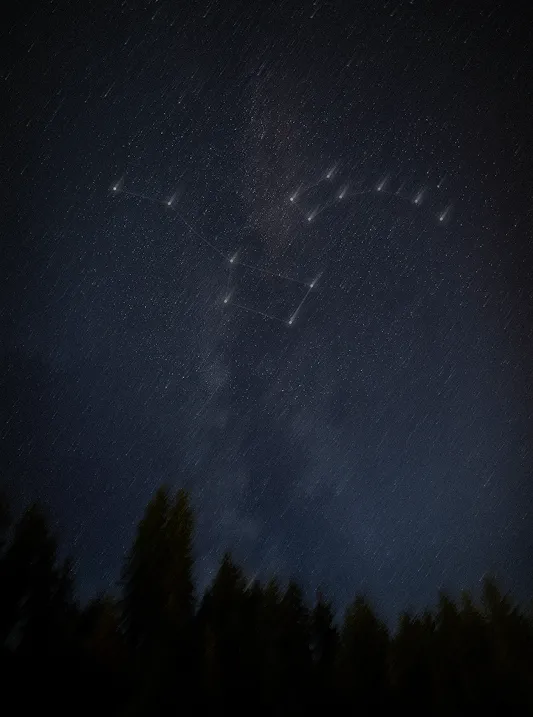
Although astrology might provide psychological insight or offer a sense of order, it ultimately does not lead a person to true transformation. The study of the stars can reveal patterns within our world, but it does not explain the spiritual purpose behind these patterns. Kabbalah, on the other hand, provides a direct method to attain the knowledge of how the upper forces descend into our world, and use that knowledge to change our nature from egoistic to altruistic.
By engaging in authentic Kabbalistic study, we begin to attract the surrounding light (Ohr Makif), a spiritual force that gradually transforms our desires, intentions, and perception. As a result, our experience of reality changes—not because of a different star alignment, but because we align ourselves with the omnipresent upper force that governs all of reality.