





Kabbalah Library
The Social Writings of RABASH
Contents
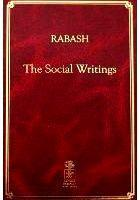
Rav Baruch Shalom HaLevi Ashlag (“Rabash”) changed the course of studying Kabbalah by integrating the concept of unity in our world to reach spiritual attainment. Rabash’s father and teacher was the great Kabbalist, Rav Yehuda Leib HaLevi Ashlag, (known as Baal HaSulam) who wrote commentary on The Book of Zohar. While Baal HaSulam gave us insight on the spiritual worlds, it was Rabash who articulated the human essence of Kabbalah for our generation. Rabash gave us the practical advice on how to realize spirituality by simply forming study groups and using unity and love as our tools for attaining spirituality in our time.
The writings in this book aren’t just for reading; the reader can utilize the book as a guide in his everyday life and within his study group. By following the advice Rabash gives us in the book, the student will discover new insights in his studies. Rabash shows how to utilize the wisdom of Kabbalah to find true spirituality in our life.
Table of Contents
They Helped Every One His Friend
What Does the Rule, “Love Thy Friend as Thyself,” Give Us?
According to What Is Explained Concerning “Love Thy Friend as Thyself”
Which Keeping of Torah and Mitzvot Purifies the Heart?
One Should Always Sell the Beams of His House
Concerning the Importance of Society
Sometimes Spirituality Is Called “a Soul”
Concerning the Importance of Friends
Make for Yourself a Rav and Buy Yourself a Friend 1
Make for Yourself a Rav and Buy Yourself a Friend 2
But the More They Afflicted Them
And There Was Evening and There Was Morning
The Importance of a Prayer of Many
One’s Greatness Depends on the Measure of One’s Faith in the Future
What Is the Substance of Slander and Against Whom Is It?
The Severity of Teaching Idol Worshippers the Torah
What Is the Foundation on which Kedusha [Holiness] Is Built
What Beginning in Lo Lishma Means in the Work
What to Look For in the Assembly of Friends
Why Are Four Questions Asked Specifically on Passover Night?
What Placing the Hanukah Candle on the Left Means in the Work
What the Torah Being Called “the Middle Line” Means in the Work
What “There Is No Blessing in That which Is Counted” Means in the Work
What the King Standing on His Field When the Crop Is Ripe Means in the Work?
What “You Have Given the Strong to the Hands of the Weak” Means in the Work
The Tree of Knowledge of Good and Evil