The history of Kabbalah spans nearly 6,000 years, beginning with the first human to delve into the mysteries of existence: Adam. This ancient wisdom, which predates religions, is not religion but a scientific method for the revelation of the hidden forces of nature to us people while we are alive in this world, or as Kabbalists say, the revelation of the Creator to the created beings.
Over 5,780 years ago, Adam lived during a transformative period in human development. This era witnessed the advent of writing, agriculture, astronomy, and early trade. It was a time when humanity began to expand its horizons. Amid these developments, Adam stood out, not because of extraordinary intellect or physical prowess, but due to an inner awakening.
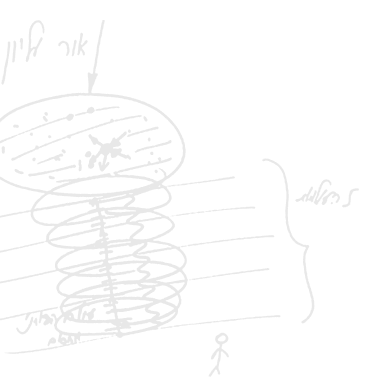
Adam posed the ultimate question: “What is the meaning of life?” This inquiry led him to uncover hidden layers of reality, which he documented in a book titled The Angel Raziel, which means “a secret force,” i.e., precisely the revelation of the single force of nature—the Creator—in reality. This marked the birth of Kabbalah. That is, Adam did not invent Kabbalah; he discovered it. He became the first person to perceive and articulate the spiritual forces shaping our existence.
Abraham
Unifying the Forces of Nature
Fast forward nearly 2,000 years to ancient Babylon, a thriving center of culture, trade, and religion in Mesopotamia (modern-day Iraq). Here, humanity’s collective ego and desires for power and control reached unprecedented heights. Among the multitude of idol worshippers was a man named Abraham.
Abraham observed that the multitude of gods worshipped in Babylon represented fragmented aspects of a single, unified force. He concluded that all the forces of nature emanated from one source—a singular, all-encompassing system. He documented his insights in Sefer Yetzirah (The Book of Creation) and began teaching those who shared his curiosity.
The group that gathered around Abraham grew into what would later be known as “the people of Israel.” This was not a nation defined by territory but a collective united by their desire to understand the laws of nature, represented by the term “Yashar-El” (“straight to God”).
Moses and the Revelation of
the Torah
Approximately 700 years after Abraham, Moses emerged as another pivotal figure in Kabbalistic history. Leading the Israelites out of Egypt, he symbolized humanity’s journey from egoistic desires (represented by Egypt and Pharaoh) to spiritual connection (Israel). Moses documented the wisdom of Kabbalah in the Torah, a text written in allegorical code that describes humanity’s relationship with spiritual forces.
The Torah’s significance lies not in its historical or moral lessons but in its description of two fundamental forces of reality: the force of bestowal and the force of reception. Moses’ teachings guided the people of Israel to attain spiritual connection through their attainment of the force of bestowal during the era of the First Temple (around 3,000 years ago).
The First and Second Temples
Collective Spiritual Attainment
During the First Temple period, the entire nation of Israel achieved spiritual attainment. They lived in harmony with the forces of nature, perceiving the hidden layers of reality through an inner tool called a “Kli” (vessel). However, this collective spiritual state was lost with the ruin of the First Temple.
The Second Temple, built with a lower level of spiritual connection, was destroyed around 70 CE. This marked the beginning of a 2,000-year period of exile, during which the spiritual wisdom of Kabbalah became concealed. During this time, Judaism emerged as the first of the main world religions, and it was characterized by external observances of what were originally the Kabbalistic principles that described inner states and attainments.
The Zohar and
the Hidden
Wisdom
Around 1,800 years ago, Rabbi Shimon Bar Yochai (Rashbi) and his group composed The Book of Zohar. This seminal Kabbalistic text is written in legends and contains the deepest and highest spiritual insights of all Kabbalistic texts. While it remained concealed for centuries, The Zohar was intended for our time— a period when humanity would begin seeking answers to existential questions.
The ARI
Making Kabbalah Accessible
The 16th century brought the revolutionary teachings of Kabbalist Isaac Luria (the ARI). He systematized Kabbalah, creating a detailed scientific blueprint of the spiritual worlds in his writings, such as The Tree of Life. The ARI’s work made the intricate wisdom of Kabbalah accessible to future generations, laying the groundwork for its eventual dissemination.
The Baal Shem Tov
Bringing Kabbalah to the Masses
In the 18th century, the Baal Shem Tov, founder of Hasidism, introduced Kabbalistic principles to broader audiences. He emphasized concepts like intention and adhesion to the Creator (the upper force of love and bestowal), simplifying the teachings for the mass expansion of these key Kabbalistic principles. Through the Baal Shem Tov, Kabbalah shifted from a hidden tradition to a widely accessible spiritual practice.
Baal HaSulam
Building the Ladder to Spirituality
In the 20th century, Kabbalist Yehuda Ashlag, known as Baal HaSulam (“Master of the Ladder”), significantly advanced the wisdom of Kabbalah. He wrote extensive commentaries on The Zohar and the ARI’s writings, as well as several essays that aimed to explain Kabbalah’s fundamental principles in ways that introduced the wisdom and method of Kabbalah to the masses.
Thanks to Baal HaSulam, anybody today who awakens with existential questions can become acquainted with how Kabbalah was made for answering precisely such questions, and receive a method by which they can climb the “ladder” of spiritual attainment to its very heights.
The Modern Era
Universal Dissemination
Today, the teachings of Kabbalah are reaching global audiences, thanks to the efforts of Baal HaSulam’s son and disciple, Kabbalist Baruch Ashlag (RABASH), and his student and personal assistant, Kabbalist Dr. Michael Laitman. Through Dr. Laitman’s organization, the Bnei Baruch Kabbalah Education & Research Institute, the wisdom of Kabbalah has become accessible to anyone who wishes to understand and attain life’s purpose.
In our time, humanity faces an unprecedented level of existential questioning. Traditional pursuits like wealth, power, and knowledge no longer satisfy the deeper yearning within a growing amount of people. This awakening, which Kabbalah describes as the awakening of the “point in the heart” (desire for spirituality), signals humanity’s readiness to connect with the wisdom of Kabbalah and uncover the hidden forces shaping our reality.
Why Study the History of Kabbalah?
The journey of Kabbalah from Adam to the present day is not merely a historical narrative; it is a roadmap for humanity’s spiritual evolution. By understanding its origins and key milestones, we can appreciate its relevance to our lives today. Whether through age-old texts like The Zohar or the modern texts of Baal HaSulam and RABASH, the wisdom of Kabbalah offers a pathway to discover life’s meaning and purpose, and to align with the forces of nature in a harmonious and peaceful manner.
As the wisdom of Kabbalah becomes increasingly accessible, it invites all of humanity to embark on a journey of spiritual connection, ultimately leading to a unified, harmonious, and peaceful world.