


Revealing The Zohar
- The Zohar is the most mysterious, and at the same time most significant book of Kabbalah.
- In recent years, it has become increasingly clear that The Zohar, written 18 centuries ago, was made for our time.
- Kabbalist Yehuda Ashlag (Baal HaSulam) opened it to us and rekindled what has long been forgotten from our hearts.
Rabbi Hya's Vision
Rabbi Hya's vision is The Zohar’s subtle way of telling us about mutual responsibility.
“Rabbi Hya fell to the ground, kissed the dust and wept, and said…” - The Book of Zohar, Introduction, item 49.
There is a story about Rabbi Hya, one of Rabbi Shimon Bar-Yochai’s prime students, the same students with whom he wrote The Book of Zohar. The story begins with a question that Rabbi Hya asked about his teacher’s soul.
From the height of his spiritual attainment, Rabbi Hya saw that souls return to their root, their highest spiritual state, only after they correct the egoistic desires within them. For this reason, Rabbi Hya asked how a soul as high as Rabbi Shimon’s could not complete its correction, but had to wait until all the other souls completed their correction, too.
Rabbi Hya couldn’t comprehend how such a great Kabbalist, through whom Light emits to the whole world, could not correct himself before the last person completed his or her spiritual vocation. The Zohar says that this question put Rabbi Hya in such turmoil that he fell to the ground, wept, and said: “Dust, o dust, how obstinate you are, how insolent? You consume all the pillars of light in the world; how impudent are you? The holy Light that emitted to the world, Rabbi Shimon Bar-Yochai, whose merit sustains the world, was swallowed in you.”
According to the wisdom of Kabbalah, a person reincarnates in this world to correct his or her soul. The correction process begins with the Creator’s desire to grant all the abundance and goodness He possesses. For this reason, He created a creature called, “the common (collective) soul.”
Subsequently, the creature was shattered into many fragments called “souls.” These souls lost their contact with the Creator. They drew farther away from Him, ultimately arriving at the lowest state of existence, called “this world.” From that state, people should begin to correct their souls and reunite with the Creator.
The wisdom of Kabbalah explains that the correction process must happen while the individual is still alive in this world, clothed in a flesh and blood body. The purpose of the process is to allow souls to independently achieve contact with their Creator, but this time they must do it consciously and of their own volition.
The wisdom of Kabbalah explains that the correction process must happen while the individual is still alive in this world, clothed in a flesh and blood body.

Prior to their descent into this world, souls were connected in the spiritual world through ties of love and giving. The decline into this world symbolizes the detachment of souls from one another to the current point of their inability to sense their interconnectedness. It is our task to reconstruct those connections while living in this world and gradually return to our initial, complete state. At the end of the process, called Gmar Tikkun ha Pratti (Individual End of Correction), each soul corrects itself and returns to the spiritual world. The state in which all the souls correct themselves is called Gmar Tikkun ha Klali (Collective End of Correction).
The “dust” on which Rabbi Hya fell in the story symbolizes the uncorrected souls that, in their state of corruption, hinder higher souls from achieving Gmar Tikkun. Rabbi Hya could not accept the fact that this process detained the soul of Rabbi Shimon, who was seemingly forced to wait for the Collective Gmar Tikkun to correct his soul. This is why Rabbi Hya demanded to “see” Rabbi Shimon, meaning to rise to a state where he could understand the order of the correction of the souls and thus receive an answer to his question.
Yet, Rabbi Hya’s request was turned down because he was still not worthy of climbing to that sublime state. In response, Rabbi Hya decided to “fast for forty days.” In Kabbalah, this act represents the acquisition of the quality of Bina, represented by the Hebrew letter Mem (whose numeric value is 40). After Rabbi Hya’s request was turned down for the second time, he continued to fast for yet another forty days, correcting himself even more and rising to a higher spiritual degree. Only then was he elevated to the “Supernal Seminary,” a state where all the corrected souls are bonded in love, attached to the Creator and filled with the Upper Light.
When Rabbi Hya climbed to that spiritual degree, he seemingly observed himself from the outside and discovered that his soul was already there, among the corrected souls, in the state of Gmar Tikkun. This amazed him even more: how could his corrected state exist before he, Rabbi Hya, had completed the correction of his soul?
The Book of Zohar uses the story of Rabbi Hya as a vehicle to explain that the whole of reality already exists. We are already included in the state of Gmar Tikkun, in our fullest glory and splendor. This world, however, is only a false picture that we experience in our present state of development.
The Zohar reveals a new perspective on life: that all the troubles and suffering we experience are intended to make us realize our own imperfections. To rise to the perception of the complete reality, we need to prefer the internal to the external, to find opportunities to incorporate the wisdom of Kabbalah into our lives. When we do that, we will rise, like Rabbi Hya, to a higher spiritual state, to the reality we truly do exist in. In that state we will be like all the Kabbalists before us, and discover the reality where all the souls are united in their perfect state.
If Thou Know Not, O Thou Fairest among Women
Based on the essay from The Book of Zohar, “The Wisdom a Man Needs” (New Zohar with the Sulam Commentary, Song of Songs, item 482).
The Revelation of The Book of Zohar in Our Time aims to help guide a person’s approach toward studying The Zohar in order to reap the most benefit from its reading.
It is built of quotes by Dr. Michael Laitman from the Daily Zohar Lessons, and answers to questions of students, that aim to clarify:
“Come and see what is written, If thou know not, O thou fairest among women, the Creator replies to the soul: If you have come without looking in the wisdom before coming here, and you do not know the secrets of the Upper World, go thy way, you are not worthy of entering here without knowledge. Go thy way forth by the footsteps of the flock, meaning reincarnate in the world, and you will know by the footsteps of the flock.”
– New Zohar with the Sulam Commentary, Song of Songs, Vol. 10
In a profound and mysterious essay, the author of The Book of Zohar, Rabbi Shimon Bar-Yochai (Rashbi), explains the above text in the book, The Song of Songs. The Song of Songs is a Kabbalistic text dealing solely with one’s perception of the Upper Worlds. This composition describes the states that a soul experiences as it climbs up the spiritual ladder, from the first degree to the complete and eternal bonding with the Upper Force, the Creator.
Rashbi reveals what happens to an individual whose earthly life has terminated without having begun the correction process of one’s soul. In such a state, the soul returns to the spiritual world as “a point in its spiritual root.”
This soul begins to experience reality through special senses, but it can only experience a tiny fraction of the spiritual reality, since it did not evolve spiritually. Rashbi explains that at this point, the soul feels that the Upper Force is “speaking” to it.
In Kabbalah, the term “speaking” means “revealing.” A soul that experiences the spiritual world discovers that the purpose of creation is to bring it to perfection and eternity, just like the Creator. But when a soul that did not evolve in our world rises to the Upper World, it feels only the gap between its own qualities and the qualities of the Creator. Such a soul senses how remote it is from realizing its vocation. When this happens, a soul begins to want to close the gap and correct itself in order to achieve wholeness and eternity.
In The Book of Zohar, this state is described as the Creator “speaking” to the soul, telling it, “If thou know not, O thou fairest among women.” Rashbi explains this saying in the following way: “If you have come without looking in the wisdom before coming here, and you do not know the secrets of the Upper World, go thy way; you are not worthy of entering here without knowledge. Go thy way forth by the footsteps of the flock, meaning reincarnate in the world.”
To exist in the Upper World, a soul must have equal qualities to those of the Creator. For this to be, the soul should develop its quality of loving and giving. This is why a soul that did not correct itself is told to leave, return to the corporeal reality, be born in a physical body, grow, and achieve a state where it stands on its own and can decide which path to take.
According to the greatest Kabbalists, such as the Rashbi, the Holy Ari, and Baal HaSulam, the wisdom of Kabbalah is the only means by which a soul can begin to discover the spiritual world. This is why Rashbi stresses that we must all know the secrets of the Torah; i.e., the Kabbalah. When we begin to implement the wisdom of Kabbalah in our lives, we correct our souls and equalize our qualities with the Creator’s quality of love and benevolence.
When this happens, our souls are rewarded with all the wondrous secrets of creation—the Thought of Creation. The next time such a soul stands before the Upper Force, it will achieve perfect and everlasting bonding with It. Moreover, in that state, it will not have to return to this world “by the footsteps of the flock.” Instead, it will experience the full grandeur of the spiritual reality.
A Wake-Up Call
We are born into a state of sleep, live in a dream, and we are not even aware of it. It is time to wake up.
“And on the first month, on the fourteenth day etc. Rabbi Chiya opened: ‘I sleep, but my heart waketh; Hark! my beloved knocketh.’”… “The assembly of Israel said, ‘I sleep in the exile in Egypt.’” It is because the exile was due to the domination of the left over the right. Also, the Mochin (Lights) of Malchut leave because of the domination of the left. This is the meaning of sleep. “My children were under the harsh enslavement,” but my heart is awake, to keep them from perishing in the exile. … “My beloved knocketh, this is the Creator, who said, ‘and I have remembered My covenant’” (The Sulam Commentary on The Book of Zohar, Parashat Emor, item 128).
In this unique essay, Rabbi Chiya, one of Rabbi Shimon Bar-Yochai’s nine students, teaches us how to listen to the voice within our hearts. This is the voice of the Upper Force, which calls upon us to bond with each other. When we do, we will achieve a new life—truer and better.
Rabbi Chiya begins his words with a verse that speaks of the first month in the Hebrew calendar. This month is called “the head of the months,” as it is the precursor of the beginning of a new life of love and unity.
The Book of Zohar says that to live such a wonderful life, we must learn how to transcend our egos while we are still living in this world, and obtain the nature of the Creator, that of love and giving. When we learn how to love one another, we will rise to another level of existence and become similar to the Creator. This is when we will be called “Adam,” (man), from the verse, Adammeh la Elyon, “I will be like the Most High” (Isaiah, 14:14).
Rabbi Chiya explains the way to achieve this sublime state by using one of the most profound verses in the Song of Songs, “I sleep, but my heart waketh; Hark! my beloved knocketh.” This verse contains the entire spiritual path, the path that will lead us to perfection.
We Were Like Unto Those Who Dream
Until one knows the wisdom of Kabbalah, one does not understand why he or she comes into this world, or what the future holds. In Kabbalah, such a state is called “sleep.” Only those who awaken from their sleep achieve spiritual attainment and can view the past as though they have
been dreaming.
A Spark from the Creator
The Assembly of Israel, of which Rabbi Chiya speaks, represents the collective of the souls of Israel—us. He explains that everyone from Israel has a spark from the Creator that wants to awaken into contact with Him. In moments when this spark awakens within us, we feel a need to search for something higher and more sublime in our lives, to understand what we are living for.
Echoes in Our Hearts
The voice of the Creator echoes in our hearts. Every person is awakened by this call, like a “clarion” from the Creator, who longs to be man’s “Loved One.” The Creator wants us to become similar to Him and to rise to His degree by uniting with Him through love among us.
The echoes resonate within our hearts to show us that we are in exile from the spiritual life, that we are asleep and that it’s time to wake up.
The echoes resonate within our hearts to show us that we are in exile from the spiritual life, that we are asleep and that it’s time to wake up.
The Creator’s Voice
These days, we have been given a wonderful opportunity. Today, every person can listen to the voice of the Loved One, the Creator. The greatest Kabbalists have paved the way for us to understand that we are sleeping, to discover the dream, and to wake up. The wisdom of Kabbalah represents “the voice of the Creator,” which echoes in our hearts. It is like an alarm clock whose ring is loud enough to awaken us to the morning of a new life. Let’s bond with it and wake up to the good life, to the Light.
A Glimpse of Light
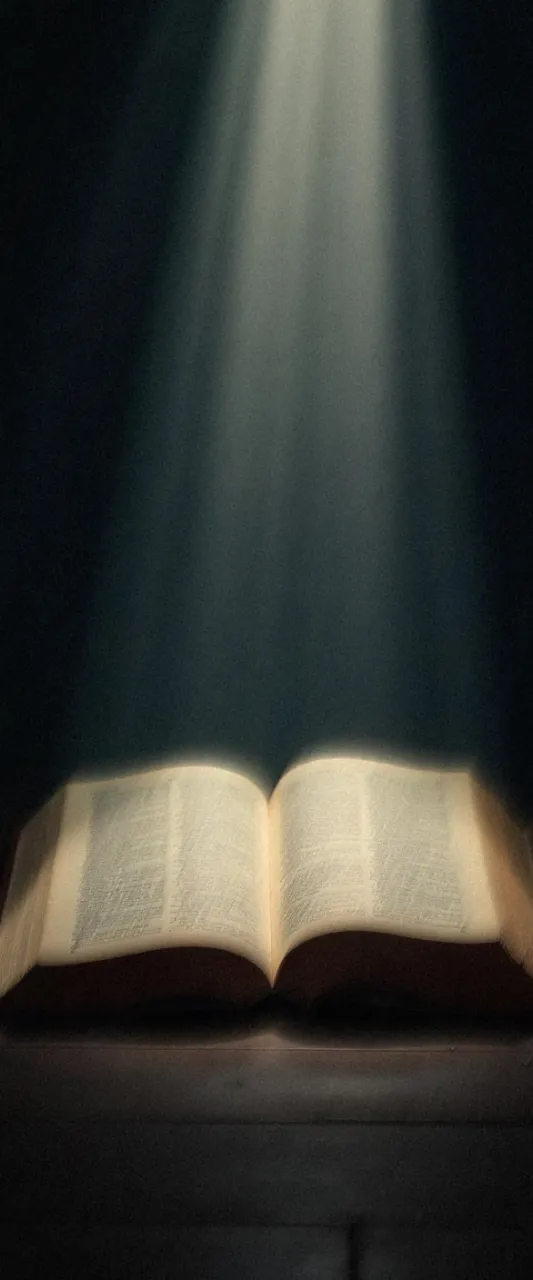
The depth of the wisdom in The Book of Zohar is locked behind a thousand doors.
--Rabbi Yehuda Ashlag (Baal HaSulam), “Preface to the Book of Zohar”
Since the dawn of humanity, unique individuals climbed the spiritual ladder and achieved the highest level of bonding with the Upper Force, the Creator. We call those people “Kabbalists.”
Through this bonding, they came to understand that the whole of reality, from the highest spiritual worlds down to our world, is founded on love and bestowal. They realized that there is nothing in the world except for this Force, and that everything that happens in reality was made only to bring humanity to permanent existence with this sensation.
Kabbalists have searched and found the answers to every question they asked—the purpose of our lives, the structure of the world, and how we can determine our destiny. They wrote about what they discovered in books such as Raziel Hamalaach (The Angel Raziel), Sefer Yetzira (The Book of Creation), Etz Chaim (The Tree of Life), and others.
Of all the books, the most seminal, mysterious, and profound is The Book of Zohar (The Book of Radiance). Its author is the great Kabbalist Rabbi Shimon Bar-Yochai (Rashbi). The Book of Zohar describes the hidden system of the Upper Guidance. It depicts the worlds, the great powers that govern them, and how one who chooses to study Kabbalah affects his or her own fate and that of humanity.
The Zohar also explains how every event cascades from the Upper World to ours, and the dressings it acquires here. But what makes The Zohar unique is the fact that it was not written for its contemporaries; it was rather intended for a generation that would live two millennia later
—our generation.
Removing the Covers
Our generation stands at the very threshold of redemption, if we only know how to spread the wisdom of the hidden in the masses.
–Baal HaSulam, “Messiah’s Horn”
The 20th century has brought unprecedented changes. These opened the door to a whole new phase, which the greatest Kabbalists have been describing for centuries in their writings. The greatest change of all is that in this century, Kabbalists state that studying Kabbalah is not only permitted, it is a must!
It is written in The Book of Zohar itself that the wisdom of Kabbalah would begin its spreading from the year 1840. The great 18th century Kabbalist, The Vilna Gaon (GRA), wrote in his book Kol HaTor (Voice of the Turtledove) that the process of the revelation of the Kabbalah would begin in 1990. In his book, Even Shlomo (Solomon’s Rock), Chapter 11, he even stated that redemption depends primarily on the study of Kabbalah.
The great Kabbalist, the Rav Kook, the first Chief Rabbi in the land of Israel (then called Palestine), explained that “the great spiritual questions that were once resolved only for the great and the excellent, must now be resolved to various degrees within the entire nation” (Eder HaYaker ve Ikvey HaTzon, p. 144).
But it was Baal HaSulam who turned the words of the Kabbalists from a vision to a tangible reality. He clearly saw that the time had come to allow everyone to study The Book of Zohar. He claimed that by studying The Zohar, the whole of humanity would rise and attain the spiritual world.
With this vision in mind, Baal HaSulam devoted himself to composing a comprehensive, accurate, and systematic interpretation of The Book of Zohar. His goal was to unveil the book to the public and make it suitable for the souls of our generation.
In the introduction to his commentary on The Zohar, he explained why he wrote it: “I have named the commentary HaSulam (the ladder) to indicate that the function of my commentary is as the function of any ladder. If you have an attic filled with abundance, you need only a ladder to climb it, and all the bounty in the world will be in your hands.”
Accelerating the Spread of the Wisdom
All the Kabbalists dreamed of our generation, when all of humanity could discover the wondrous things they already had. They prayed that through reading the authentic sources they had left for us, we, too, would achieve bonding with the Upper Force, as did they. In his commentary on The Book of Zohar, Baal HaSulam threw us a rope, “a life buoy.” In doing so, he paved our way to a future of abundance and prosperity.
Baal HaSulam called upon us to give greater weight to engagement in the wisdom of Kabbalah, and accelerate the spreading of the wisdom. He knew that only the wisdom of Kabbalah could elevate the world to the spiritual realm and into the eternity that Kabbalists had been experiencing throughout the generations.
Webster’s Dictionary defines a generation as “a group of individuals born and living contemporaneously (at the same time).” In Kabbalah, however, a generation is a spiritual phase. According to great Kabbalists such as the Holy Ari, our generation—our spiritual phase—began in the 16th century.
The longer we wait with the spiritual ascension our generation is meant to achieve, the greater will be our discomfort. The spiritual realm, which determines what happens in our world, will increase its pressure on us until we decide to achieve this realm for ourselves.
In the words of the great Kabbalist Rabbi Avraham Azulai (in his introduction to the book, Ohr ha Chama (Light of the Sun)), “I have found it written that the above decree to not openly engage in the wisdom of truth was only for a time—until the end of the 1490. From then on … the sentence has been lifted, and permission was given to engage in The Book of Zohar. And from the year 1540 it has become praiseworthy to engage in great numbers since it is by virtue of this the Messiah King will come, and not by another virtue. It is inappropriate to be negligent.”
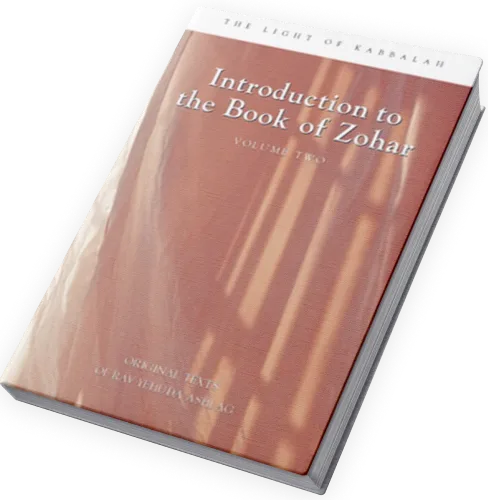
Introduction to the Book of Zohar
Book containing Baal HaSulam’s introductions to The Zohar, with commentary by
Dr. Michael Laitman
“Baal HaSulam wrote five introductions to The Zohar: ‘Introduction to the Book of Zohar,’ ‘Preface to The Book of Zohar,’ ‘The Preamble to the Commentary of the Sulam,’ ‘Pticha-Preface to the Wisdom of Kabbalah,’ and ‘General Preface.’ They provide us with the correct approach to the study of The Zohar, so that by tuning ourselves to it, we can draw the Upper, Divine Light, the force which ushers us into the spiritual realm.”
Kabbalist Dr. Michael Laitman,
p. 296 in Introduction to The Book of Zohar.
Introduction to The Book of Zohar is an in-depth investigation, with Dr. Laitman’s commentaries, to two of these introductions: ‘Introduction to the Book of Zohar’ and ‘Preface to the Book of Zohar.’
The ‘Preface to the Book of Zohar’ section is indeed a life-changing experience. Here, Baal HaSulam plants key concepts in the readers’ mind, and Dr. Laitman makes certain we will perceive them as something completely new and removed from all of our past studies and experiences.
The concepts presented in the ‘Preface to the Book of Zohar’ are Kabbalistic concepts dealing with our perception of reality. Once they are planted, you can then use them to expand your
perception endlessly.
The ‘Introduction to the Book of Zohar’ section spans a wider range of concepts, covering the entire picture of creation, the evolution of souls, and discusses the responsibility of people in our times who have been granted a desire to ascend spiritually. On this topic, the last twenty pages of this book (from item 66 of Baal HaSulam’s article onward) form the greatest climactic finale out of all of Dr. Laitman’s books, discussing the causes of war and all personal and social misfortunes, their solution, and the direction the world will take if those who are responsible for implementing the solution do not complete their work in due time.