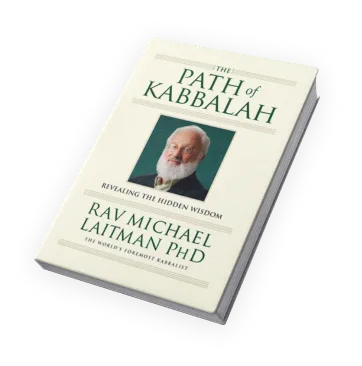
Kabbalah books are expressions of unique experiences of a reality beyond what most people perceive. Humans live in this world, experiencing and interpreting it through their senses, creating personal “pictures” of life. If everyone described their individual feelings, those descriptions would be of limited interest, as we all perceive the world in similar ways. However, Kabbalistic writings are distinct because they describe the experiences of a person who, while living in our physical world, also perceives a higher, spiritual world that remains hidden from others.
A Kabbalist is someone who has attained or been granted the ability to feel this higher world. More importantly, they can articulate their sensations in a way that enables others to understand and benefit from them. By studying these writings, readers can develop the necessary organs of sensation to perceive the spiritual world for themselves. This process lets them see their past and future states, above time, which does not exist in the spiritual reality. Thus, they can experience a reality where they exist simultaneously in the corporeal and spiritual worlds.
Kabbalistic books are powerful tools. They employ methodologies and descriptive techniques that, when studied under proper guidance and with the correct approach, help a person reach the same spiritual level as the author. For this reason, it is crucial to carefully choose which books to study. Throughout history, various authors have used different methodologies, and historical experience reveals which books are most effective in facilitating spiritual development and navigating the upper world.
These books serve as guides, much like a tourist would rely on information about an unfamiliar country. Since the time of Adam, the first man, humanity has grown and spread across the earth. While many sages have existed among them, most have not left written records. What we do have are fragments—scrolls and parts of texts—that are difficult to classify or piece together systematically. Therefore, the legacy of specific Kabbalistic texts becomes invaluable for those seeking spiritual advancement.
What Should We Focus On When Reading Kabbalah Books?
Kabbalists wrote books to serve two purposes: for us before we attain the spiritual world, to help us draw the reforming light, and for us after we have reached the spiritual world, to enable us to tangibly and emotionally grasp everything they describe.
Kabbalah books are never theoretical; they do not require us to accept ideas solely in our minds. Instead, they are meant to be felt and experienced.
The most important focus while reading Kabbalah books is on the desire, which is the core of our being, while the mind is merely a tool to help us work with that desire.
The brain was given to us not for intellectual study but to organize and utilize the means necessary to cultivate and enhance our feelings.
Therefore, the goal of studying these texts is not to accumulate knowledge but to draw the reforming light, letting us transform and elevate our spiritual perception.
The Intention When Reading Kabbalah Books
When reading Kabbalah books, the intention must be arranged with great care. The Kabbalists provide clear guidance on this. The focus should be on the end result: facing the book with the correct intention. While reading, even without fully understanding the text, one should wait, anticipate, and ask for a force to come and transform them—from a state of receiving to one of bestowing. This force, the light of bestowal, is what the study seeks to awaken. During the reading, it is essential to maintain this thought and not stray from it, constantly increasing the intensity of the intention. Achieving this level of focus is nearly impossible without an environment that provides support, instills importance, and obligates one to stay on track.
The supportive environment plays a crucial role in this process. By investing in strengthening our environment, we expand it. This investment ensures that, at the critical moment of study, we are aligned with the purpose: facing the book and demanding the light that reforms. Every action, from engaging with the environment to examining personal conduct, should connect back to this central intention. Like a pyramid, the process starts with many elements—learning the wisdom, creating our supportive environment, experiencing the influence of the light from the study, sharing the wisdom, and attaining the spiritual world—and funnels into a single purpose: facing the authentic writings of Baal HaSulam with the right intention.
Having the correct intention means clarifying and innovating this focus throughout one’s life, especially during the study. This is the core of the work. As for those who join the study through videos or other media without reading the books, they, too, can attract the reforming light. Whether or not one knows how to read or understands the language is irrelevant. What matters is the longing to connect, to draw the reforming light, and to achieve correction. The desire and yearning are what count—not the extent of one’s knowledge. It is not the wise one who attains, but the one who yearns for transformation.
The Timeless Value of Kabbalah Books in a Digital World
In today’s world, everything is electronic. We read from computers, send emails instead of writing letters, and watch television and movies through screens. Paper seems less necessary, even though newspapers are still printed. However, people are increasingly drawn to what they see on screens.
Kabbalists, on the other hand, used materials like paper, scrolls, wood, or even rock to write down their wisdom. This act of writing holds a unique significance because written letters carry a special power. A book, especially one containing spiritual and inner wisdom, will never lose its value or importance. Within such books lies an internality—a depth—that exists between the letters and words, something that cannot be replicated on a screen.
This substance, the physical material of a book, along with the written letters, corresponds to the spiritual roots of the book, its author, and its story. The essence of creation, the process of correction, and the ultimate joyful outcome—where we reach and cleave to the upper force of love, bestowal, and connection—are embedded within the stories these books tell.
The goal is not just to understand the wisdom written in these books but to achieve a connection with the upper force. Through studying, one seeks to cleave to the upper force, adopt its attributes, and align with its thought. Ultimately, the purpose is to grasp the intention of the upper force, which is also the thought of the author, and to reach the deep connection described in the texts.
“Through studying, one seeks to cleave to the upper force, adopt its attributes, and align with its thought.”
“Through studying, one seeks to cleave to the upper force, adopt its attributes, and align with its thought.”
Introducing Kabbalah's Basic Concepts and Fundamental Principles
Over 70 Books in Over 40 Languages
Overview of Books by Kabbalist Dr. Michael Laitman
Kabbalist Dr. Michael Laitman received the wisdom of Kabbalah through his teacher, Kabbalist Baruch Ashlag (RABASH), the son and disciple of Kabbalist Yehuda Ashlag (Baal HaSulam), and since studying with RABASH, has dedicated his life to passing on the method of Kabbalah as described by Baal HaSulam and RABASH to his students and to anyone who is drawn to discover the meaning of life through the method.
With both The Book of Zohar and Baal HaSulam pointing to the end of the 20th century as the time when a growing need in humanity would emerge for spiritual ascent—that which the wisdom of Kabbalah provides a method to attain—Dr. Laitman’s teachings have been instrumental in further explaining and expanding the wisdom to reach wider and wider circles of humanity. Today, we see Kabbalah studied in all countries, by people of all walks of life, as more and more people become attracted to the truly unique answers it provides to life’s key existential questions.
Dr. Laitman’s many books include those which he personally sat down and wrote in order to disseminate the knowledge of Kabbalah’s basic concepts and fundamental principles, and also to provide guidance on taking the first steps on the spiritual path. There are books that compile 100s of answers that Dr. Laitman personally wrote to student questions he received in an online forum dating back to 1998. There are also dozens of books that have been ghostwritten in the name of Dr. Laitman, under his authorization and approval, based on 1,000s of hours of lessons and talks that Dr. Laitman has given since he first started his group Bnei Baruch (“the sons of Baruch,” referring to his teacher, Kabbalist Baruch Ashlag) in the early 1990s.
Kabbalah's Basic Concepts and Fundamental Principles
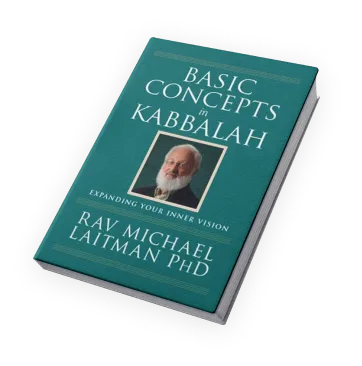
Basic Concepts in Kabbalah
Kabbalist Dr. Michael Laitman’s first ever book. It is a collection of abbreviated and summarized versions of key articles by Baal HaSulam that explain Kabbalah’s basic concepts and fundamental principles.
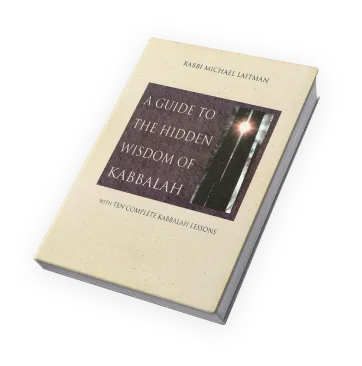
A Guide to the Hidden Wisdom of Kabbalah (with Ten Kabbalah Lessons)
While no longer available in English, A Guide to the Hidden Wisdom of Kabbalah is a book that speaks to the spiritual seeker, introducing them to the wisdom of Kabbalah and how it answers life’s deepest questions. Moreover, the “Ten Kabbalah Lessons” serve as Dr. Laitman’s own written introduction to the science of Kabbalah, i.e., the Study of the Ten Sefirot and Pticha (Preface to the Wisdom of Kabbalah).
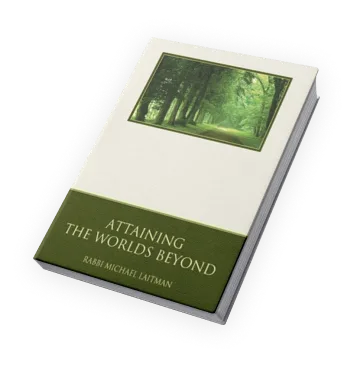
After his teacher, RABASH, passed away in 1991, Dr. Laitman spent two full weeks just sitting and writing, and Attaining the Worlds Beyond is the result of what he wrote. A very internal and emotional work, this text guides Kabbalah students of all levels into the inner-emotional work that a Kabbalist conducts in their drawing closer to the single force of love, bestowal, and connection that created us.
Together Forever is one of the chapters of Attaining the Worlds Beyond, which is an allegorical story about a magician who created the universe, but who felt alone with everything he had created, and this led him to create man—a being who has the ability to become like the magician, and to be the magician’s friend. Together Forever is a picture book of this story that is suitable for reading to children.
The Kabbalah Experience:
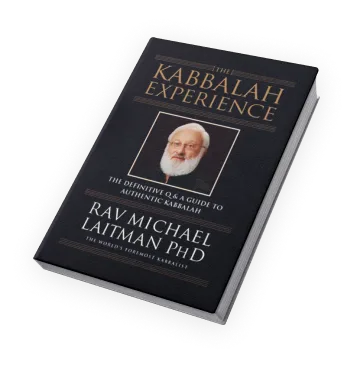
The Definitive Q&A Guide to Authentic Kabbalah
In 1998, Dr. Laitman personally answered questions on a student forum on the kabbalah.info website. The Q&A covered a wide range of topics that both people with a general interest in Kabbalah as well as beginner students ask. Dr. Laitman’s answers to these many questions serve to direct people to resolve several confusions, misconceptions, and doubts regarding the wisdom of Kabbalah.
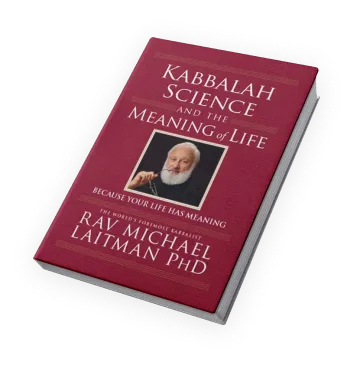
Kabbalah, Science, and the Meaning of Life:
Because Your Life to Meaning
In 2005-2006, Dr. Laitman received his Ph.D. for his paper on Kabbalah as a modern science, a feat that he stated that he did purely to help serve Kabbalah’s further credibility and expansion into the world. During this period, Dr. Laitman wrote several articles describing how Kabbalah is a science, and these articles were also read and discussed in his daily Kabbalah lessons. Parallel to this process was the release of the film, What the Bleep Do We Know!?, which helped popularize concepts about the boundary where science meets spirituality, and Dr. Laitman held several meetings and conferences with scientists from the film. Material from Dr. Laitman’s articles as well as discussions with these scientists all found their way into Kabbalah, Science and the Meaning of Life. Especially if a spiritual seeker interested in Kabbalah has a scientific inclination, then this book is a great match for them.
A deep dive into two of Baal HaSulam’s key introductory articles on The Book of Zohar—“Introduction to the Book of Zohar” and “Preface to the Book of Zohar”—with commentary by Dr. Laitman from a series of lessons on these texts.
While Dr. Laitman was focused on describing Kabbalah as a science, the word “Kabbalah” was becoming popularized in mainstream media more and more as high-profile celebrities such as Madonna and Ashton Kutcher were openly promoting their connection to Kabbalah. Although they were not studying from Dr. Laitman, the general popularity of Kabbalah surged in this period, and many people found themselves searching to find out what Kabbalah is in a few words. Dr. Laitman and the students of Bnei Baruch viewed this as an opportunity to simplify and shorten the messaging that describes what Kabbalah is, is not, who it is for, and why it is becoming popular in our times.
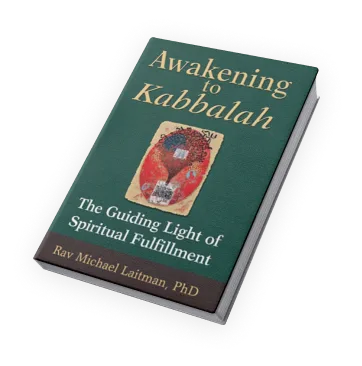
In this period, two publishers reached out for books by Dr. Laitman on Kabbalah, including The Complete Idiot’s Guide series, and a smaller spiritual book publisher, Jewish Lights. As a result, Dr. Laitman wrote The Complete Idiot’s Guide to Kabbalah, Kabbalah Revealed, and Awakening to Kabbalah, all the while, it was a period when articles and video clips started getting distributed regularly on the Internet in shortened formats for the first time.
Kabbalah on the Global Crisis
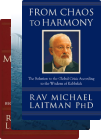
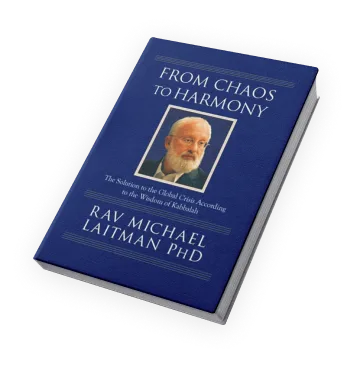
From Chaos to Harmony: The Solution to the Global Crisis According to the Wisdom of Kabbalah
Kabbalist Dr. Michael Laitman’s activities in the mid-to-late 2000s as a member of the World Wisdom Council (WWC) included attending several conferences and meetings with leading world thinkers, and the creation of much material on how to identify and navigate through a looming global crisis, which ended up materializing in late 2008.
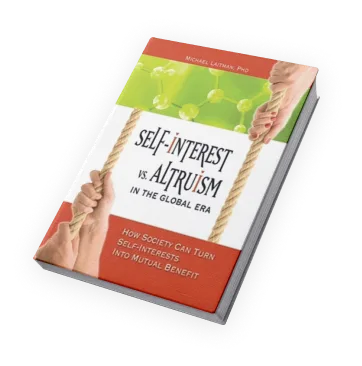
From Chaos to Harmony: The Solution to the Global Crisis According to the Wisdom of Kabbalah was published in 2006 after the first few WWC conferences Dr. Laitman participated in. The book describes the overarching causes and a solution to the global crisis in a new language that suited the meeting point between modern science and ancient wisdom. Thanks to working with various world thinkers and their organizations, Dr. Laitman was able to focus on certain principles from Kabbalistic texts of Baal HaSulam and RABASH that did not previously gain much attention, such as the idea of humanity consisting generally of 90 percent egoists and 10 percent altruists, and also how humanity could learn from examples of altruism throughout the animal and plant kingdoms in order to apply relationships that are aligned with the altruistic force of nature. Self-Interest vs. Altruism in the Global Era furthered these ideas into a more practical realm of how human society could turn self-interests into mutual benefit, and why such a transformation is required.
Dr. Laitman’s monumental commentary to Baal HaSulam’s Sulam commentary on the Book of Zohar, including in-depth descriptions of the science of Kabbalah as presented in The Zohar.
While The Zohar: Annotations to the Ashlag Commentary is Dr. Laitman’s own annotations to Baal HaSulam’s Sulam commentary on The Book of Zohar, with in-depth commentary on the structure of the upper Sefirot, Partzufim, and worlds, and the soul’s journey through this upper, spiritual system, Unlocking the Zohar and The Revelation of the Book of Zohar in Our Time come from a period when Dr. Laitman led the creation of Zohar for All: an edited version of the Sulam commentary on The Book of Zohar, suitable for reading by the masses.
Together with the creation of the Zohar for All multi-volume set of books, Dr. Laitman taught hundreds of lessons on The Zohar over the years, and participated in numerous interviews, talks, and conferences on what Kabbalists often refer to as the loftiest of all Kabbalistic texts. Unlocking the Zohar is a meticulous exposition of Dr. Laitman’s key messages on the revelation of The Book of Zohar in our time, and The Revelation of the Book of Zohar in Our Time is a practical guide in Dr. Laitman’s direct words on how The Zohar affects the inner and group work of individuals striving to attain the purpose of existence—adhesion with the upper force of love and bestowal—using the exalted text.
From the financial crash of 2008, an era characterized by a sudden boom of mass unemployment, home foreclosures, bankruptcies, and global protests, it was clear that the world had entered a new era. Where ideas of global interconnectedness and interdependence had sounded like niche new-age concepts just a year earlier, from September 2008 onward, “global interdependence” were words regularly heard in mainstream media from the mouths of world leaders, politicians, and economists.
In this era, Kabbalist Dr. Michael Laitman developed a language and method that he termed “integral education” and “the wisdom of connection.” It built upon providing a connection-enriching educational approach to solve humanity’s growing problems and crises in every field of life, such as depression, anxiety, stress, loneliness, and drug abuse on the personal level; unemployment, poverty, corruption, war, and social unrest on the social level; as well as the ecological challenges of climate change, peak oil, and natural disasters.
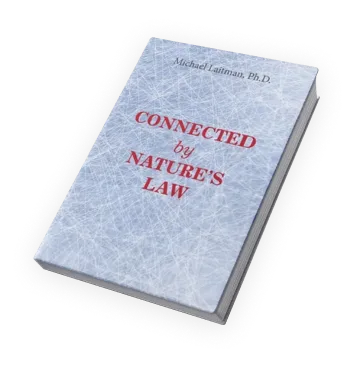
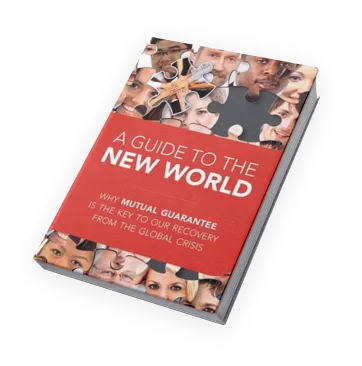
Starting with the TV program, New Life, which began in 2009 and continues to this day, Dr. Laitman expounded his ideas on how human society could solve their problems through connection-enriching education. The first fifteen programs of New Life found their way into the book, Connected by Nature’s Law and A Guide to the New World, with the former being more detailed and closer to the original transcripts, and the latter, more summarized and adapted to crises humanity was experiencing at the time. In addition to New Life, Dr. Laitman held talks with a wide range of thinkers from different fields, including economists, educators, journalists, media creators, and several others.
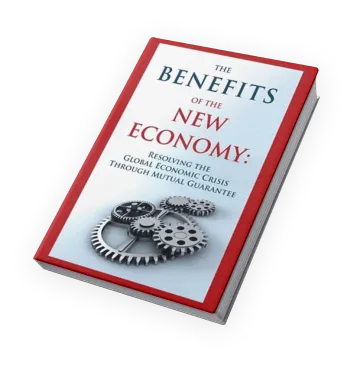
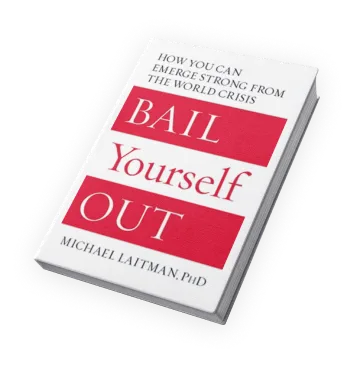
Dr. Laitman’s sessions with economists let him outline his vision for an an economy of positively connected human relations in the book, The Benefits of the New Economy. Also, his conversations with various educators let him express his vision in other texts, with more of a theoretical focus in The Psychology of the Integral Society and Children of Tomorrow, and a more practical slant in Bail Yourself Out and Completing the Circle.
From the early 2000s, Kabbalist Dr. Michael Laitman had been warning about a forthcoming boom in antisemitic sentiment worldwide, including in countries such as the United States, where Jews felt mostly safe. While in the beginning, these ideas sparked various negative reactions, like mockery and anger, today we live in a world where rampant global antisemitism is an undisputed reality. Predating the 2014 Gaza-Israel War, in which antisemitism starting surging, Like a Bundle of Reeds lays down Dr. Laitman’s complete message about the root cause and solution to antisemitism, and the role of the Jewish people.
The more antisemitism has intensified, the more Dr. Laitman has invested in disseminating and explaining its cause and solution, and the role of the Jews, as a means for not only providing a way for the phenomenon’s alleviation, but also as a means for paving a fateful path to a positive future for humanity.
The Jewish Choice: Unity or Antisemitism includes deep research, with numerous historical references, which shows a historical pattern of Jewish division resulting in immense Jew-hatred, irrational condemnations, and violence; and that Jewish unity leads to moments of prosperity and peace.
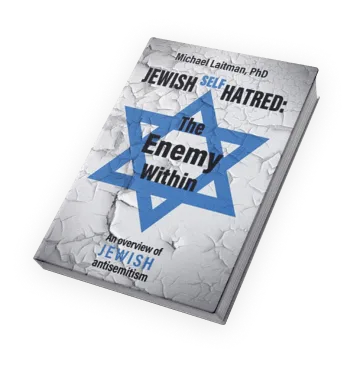
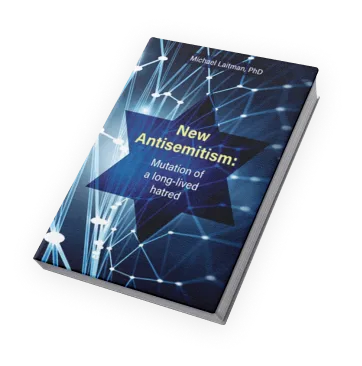
Jewish Self-Hatred explains the unique phenomenon of Jews who take aim at other Jews through several such examples, explains its root, why it happens specifically to Jews, and how it connects with the unifying role of the Jews. The New Antisemitism dresses the message of the cause and solution to antisemitism, and the role of the Jewish people, upon the post-COVID era. It focuses on the modern-day guise of antisemitism in the movement to delegitimitize the State of Israel, viewing antisemitism as an emotional pressure that awakens in order to prod the Jews to realize their fateful unifying role in—and for—humanity.